Fifty-one secondary school girls from across Nigeria emerged as innovators in the first National Intellectual Property (IP) Youth Camp for Girls in STEAM, last week, where they pitched innovations they had designed, named, and built an IP strategy around.
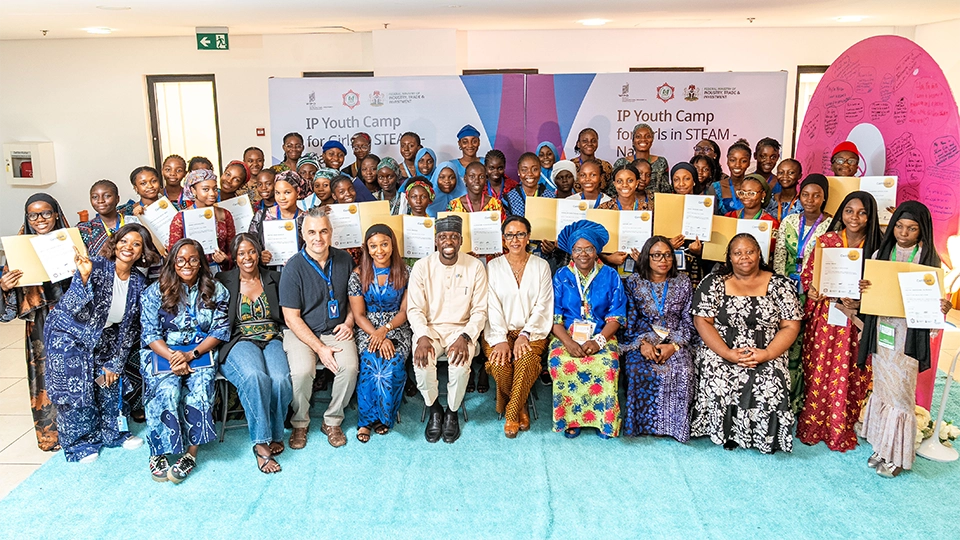
Held in Abuja from 21 to 24 April 2026, the camp was convened by WIPO under its Intellectual Property and Gender Action Plan (IPGAP), in collaboration with the WIPO Academy's IP4Youth and Teachers Program, the WIPO Nigeria Office, as well as our national partners, the Nigerian Copyright Commission, the Patents and Designs Registry, and the Trademark Registry. Participants, aged 13 to 17 and drawn from 10 public and private secondary schools across Abuja, were guided through four days of structured programming introducing them to practical skills on how to invent and protect their innovations through IP and transform them into market-oriented solutions.
This initiative reflects WIPO's commitment to closing the gender gap in innovation by reaching girls early, equipping them with knowledge of IP and the confidence to see themselves as creators, inventors and entrepreneurs. When young women understand how to protect and leverage their creations and inventions, they are better positioned to participate fully in the global innovation economy.
WIPO Deputy Director General, Lisa Jorgenson
Why Nigeria. Why Now.
Globally, women accounted for just 18% of inventors listed in published PCT applications in 2024, up from 11.6% in 2010. At the current rate of progress, parity among PCT-listed inventors is not projected until 2077, and in industrial design applications, not before 2099.
In Nigeria, women represent around 22% of STEM graduates and remain underrepresented in innovation and entrepreneurship. Just over 20% of startups are female co-founded and only 12% have a female CEO. Female-founded startups in Nigeria receive under 1% of venture funding, highlighting a stark gender gap.
Closing these gaps could add an estimated N15 trillion to Nigeria's GDP. Women-owned businesses with patents pending already generate revenues more than 16 times higher than those without IP protection, highlighting IP as a direct and measurable economic lever.
Data shows that talent is equally distributed, but opportunity is not. IP is a powerful tool to bridge that gap. By ensuring that girls and women understand how to protect and commercialize their innovations, we are not only advancing women’s economic capacity, but we are also strengthening economies and unlocking untapped potential.
WIPO Deputy Director General, Hasan Kleib.
Nigeria’s Inspiring Voices
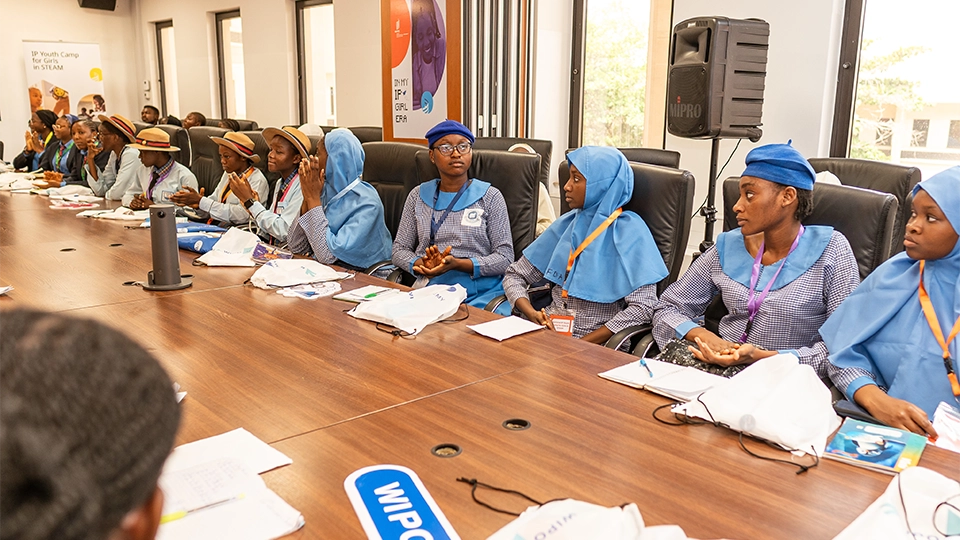
The camp was designed and delivered following the model of the WIPO IP4Youth projects, which introduces young people to gamify learning of creativity and IP as a practical tool for innovation and entrepreneurship. Building on that model, the program guided participants from initial idea generation combining creative-thinking-inertia workshops, game-based learning linked to community problem-solving and pitching a business proposal to mock investors.
Participants also explored nature-inspired innovation, drawing ideal solutions from plants and biosystems around us, an approach that demonstrated the breadth of the biomimicry invention methodology. Each session was anchored by a journey of a Nigerian woman inventor or entrepreneur who had navigated the very system the participants were being introduced to, bringing credibility, proximity and direct professional experience to concepts that might otherwise remain abstract.
Bella Victor, a young student of nursing, and the founder of Bellart Creative Hub, traced her journey from secondary school spoken word performances to professional recognition, new platforms and financial rewards. Her session on identity, gender-based violence and the girl child connected creative expression directly to ownership and economic opportunity, opening a conversation about IP that, for most participants, was entirely new.
Kemisola Bolarinwa, Chief Executive Officer of Nextwear Technologies, presented her smart bra designed to detect early signs of breast cancer, developed in response to the limited availability of affordable screening for women in Nigeria. She shared the process of securing patent protection, including challenges in navigating the national system and the institutional support received, providing participants with a concrete and credible example of a protected invention.
Maryam Lawan, founder of Blue Sapphire Hub, described building a technology training centre for women in northern Nigeria with limited funding and against persistent social expectations.
Busola Bakinson, Legal Expert specializing in Commercial IP, Chanda Nkholoma, Creativity and IP Expert, and Leonid Chechurin, Professor at LUT University and expert in the Theory of Inventive Problem Solving (TRIZ), contributed their expertise across IP, innovation and entrepreneurship education throughout the program.
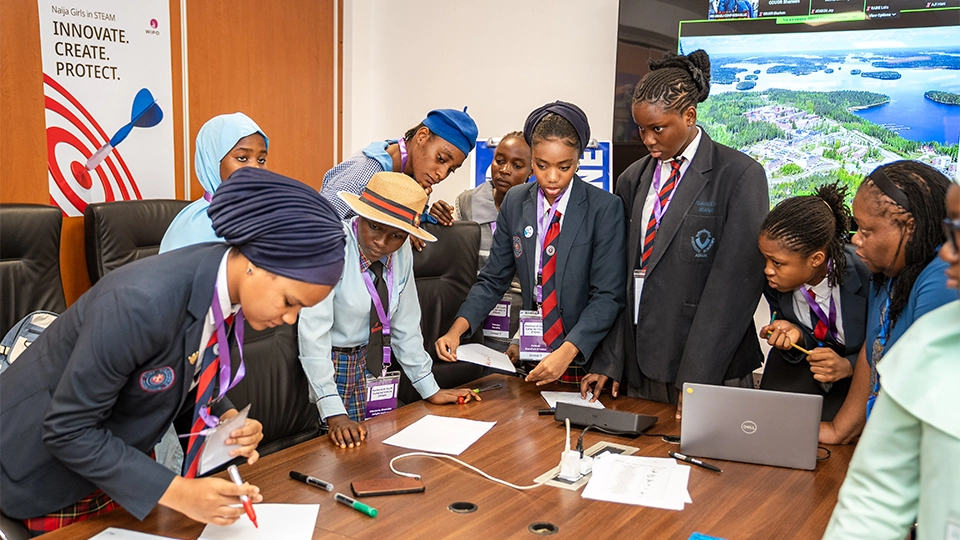
Divided into seven teams, participants created concepts for original inventions targeting specific problems and pitched their innovation proposals to a mock investor panel. Using a learn-as-you-play methodology, hands-on approach, they engaged in interactive, team-based activities that encouraged creativity, problem-solving, and the practical application of IP concepts.
Each team’s innovation addressed an identified challenge in Nigeria and was supported by their proposed comprehensive IP strategy. The students showcased their practical understanding of various IP protection mechanisms, including patents, trademarks, industrial designs, utility models, and copyright, as relevant to their respective innovations.
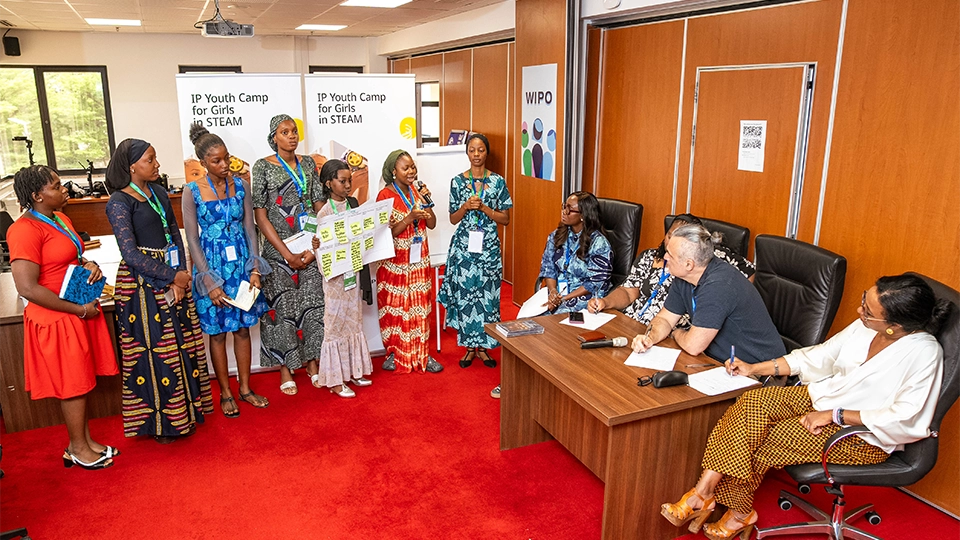
Proposed innovations presented included an AI-enabled smart helmet for motorcyclists incorporating built-in navigation and audio guidance; a digital platform connecting farmers and restaurants to facilitate the exchange of produce and organic waste; a USSD-based rural health application designed for communities without reliable internet connectivity; a security tracking system modelled on biological principles to assist authorities in locating kidnapping victims; a preventive snakebite vaccine targeting high-incidence states ; an industrial air filtration system for automotive and manufacturing environments; and a heat-regulating phone pouch with integrated charging capability.
IP is a critical driver of innovation and entrepreneurship. It turns ideas into assets, enabling creators to build, scale, and sustain businesses. By introducing girls to these concepts early, we are not only inspiring innovation but also empowering a new generation of women to actively participate in and shape the entrepreneurial ecosystem.
Busola Bakinson

I will continue with my education, and in the future, I will fulfil my dream of becoming the best robotics engineer in the world. I will also protect my inventions through IP
15-year-old Ayim MaryJane Efa from the Government Secondary School in Gwarinpa, participant in the camp
Participants also articulated broader commitments to bridge the gender gap in IP, including their plans to establish IP clubs in their schools, develop platforms to promote women's voices in innovation, and advocate within their communities for the documentation, protection and commercialization of creative and inventive work.
A Framework for Systemic Change
Running alongside the WIPO IP Youth Camp for Girls in STEAM, WIPO convened a consultation with secondary school teachers from public and private institutions across the Federal Capital Territory. The consultation focused on translating the outcomes of the camp into a sustainable, system-level intervention within Nigeria's formal education system.
Teachers called for IP, innovation and entrepreneurship concepts to be integrated into existing curricula across science, arts and humanities, emphasizing the need to invest in educators as multipliers for broader impact.
Participants agreed on a Train-the-Trainer model that will certify teachers across the Federal Capital Territory to deliver IP-integrated learning in secondary schools. WIPO will support the initiative through teacher-friendly curriculum modules, cascade training programs, and evidence-based advocacy using student outcomes to inform national policy.
The Abuja pilot is designed as a proof of concept for replication across Nigerian states. The 51 participants who completed the program this week, and the educators committed to carrying its lessons forward, represent the first cohort of what WIPO and its Nigerian partners intend to be a sustained national movement.