WIPO and partners convened a regional judicial workshop in Dakar, Senegal, equipping judges from across francophone Africa to address complex intellectual property (IP) disputes arising in the context of major sports events.

Landmark workshop in Dakar
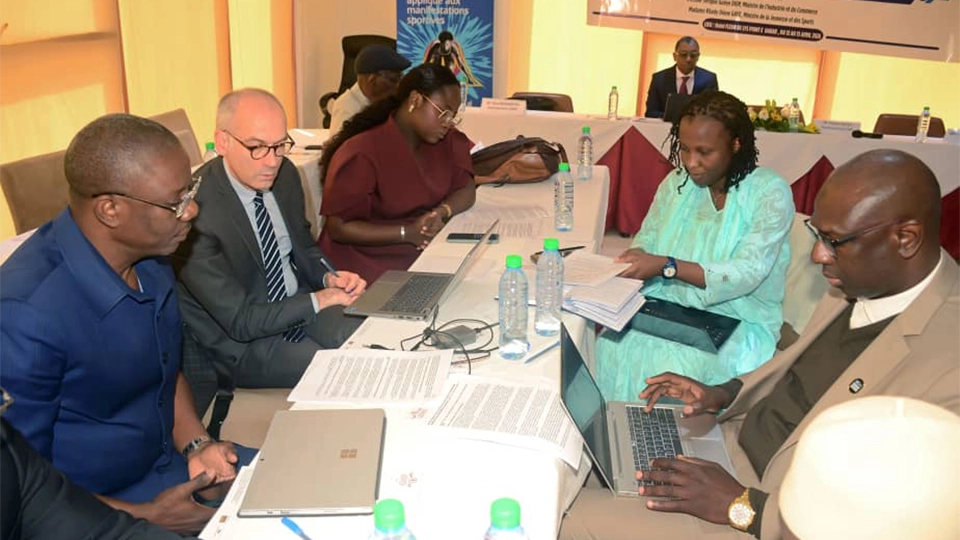
From April 13 to 15, 2026, WIPO, together with the Senegalese Agency for Industrial Property and Technological Innovation (ASPIT), the African Intellectual Property Organization (OAPI), the French National Institute of Industrial Property Patent and Trademark Office (INPI‑France), and the Réseau africain des magistrats de propriété intellectuelle (RAMPI; African Network of Intellectual Property Judges), organized a Regional Judicial Workshop on Adjudicating Intellectual Property Disputes in the Context of Sports Events in Dakar, Senegal.
The event took place against the backdrop of Dakar’s preparations to host the Youth Olympic Games from October 31 to November 13, 2026, as well as the entry into force of the Bamako Agreement and the implementation of the African Continental Free Trade Area (AfCFTA).
Strengthening judicial capacity on IP and sport
The workshop brought some 40 participants, including around 11 judges from Senegal, eight RAMPI members from Cameroon, the Central African Republic, Chad, Congo, Côte d’Ivoire, Guinea, Mali and Togo, two representatives of Côte d’Ivoire’s National Counterfeiting Committee, and other national stakeholders, fostering regional dialogue on convergent judicial approaches to IP in sport.
Over three days, participants engaged in a comprehensive program combining expert presentations, case studies, mock exercises and panel discussions on the role of IP in the sports sector. Sessions addressed the international and regional IP framework, including the Bangui Agreement, as well as copyrights in audiovisual works, broadcasting and digital dissemination, trademarks and industrial designs, image rights, licensing and sponsorship, enforcement mechanisms, and remedies such as injunctions, seizures, damages and criminal measures.
High-level engagement and expert contributions
The workshop was opened by senior representatives of Senegalese institutions and WIPO, underscoring the strategic importance of IP for the creative economy and the sports industry in Senegal and the wider region. Speaking on behalf of WIPO, Deputy Director General Sylvie Forbin highlighted that IP is a cornerstone of the sports sector and emphasized the central role of judiciaries in ensuring the consistent and predictable enforcement of IP rights to foster trust, investment and sustainable development. ASPIT Director General Françoise Faye emphasized the country’s determination to leverage intellectual property as a driver of innovation, investment and value creation around Dakar 2026 and other major events.
Speaking on behalf of the Government of Senegal, the Permanent Secretary of the Ministry of Trade and Industry Seydina Aboubakar Sedikh Ndiaye underlined that sport has become a global, value‑generating industry, calling for robust IP regulation and effective enforcement to safeguard brands, sponsors and creators. He recalled Senegal’s national Vision 2050 and stressed that the Youth Olympic Games offer a dynamic economic platform for businesses, brands and creators, each with a vested interest in the protection and management of IP. Together, these interventions set the tone for a forward‑looking discussion on how courts can support a secure and predictable IP environment for sports.
Judicial experts, together with contributors from OAPI, INPI‑France, universities in Dakar, Paris and Geneva, as well as legal practitioners and representatives of the International Olympic Committee provided practical perspectives on topics ranging from anti‑counterfeiting and anti-piracy during major competitions to the protection of Olympic symbols and the handling of unfair competition and platform liability. The presence of a special adviser to the Head of State and a recognized sports marketing expert, along with representatives of Senegal’s Youth Olympic Games Organizing Committee and local media, underscored both the political support and the high‑level relevance of the discussions.
Concrete outcomes and next steps
Before the workshop’s conclusion, participants adopted a set of recommendations aimed at strengthening the protection and enforcement of IP rights in the context of major sporting events. These recommendations call on state authorities to reinforce legal and institutional frameworks, on OAPI to continue harmonizing practices and promoting effective application of the Bangui Agreement, on judiciaries and RAMPI to deepen capacity building and case‑law sharing, and on right holders and sports stakeholders to intensify awareness‑raising and practical guidance on IP.
The workshop’s impact extended beyond the conference room, with approximately 2,700 participants (magistrates or other stakeholders) following the proceedings through a network of the Dakar Commercial Court. The exchanges and recommendations provide a solid basis for enhanced cooperation among judges and institutions and for more effective adjudication of IP disputes linked to sports events in OAPI member states and beyond, in the lead‑up to Dakar 2026 and future regional sporting competitions.