New research reveals how $20+ billion has transformed music intellectual property into a global asset class—with profound implications for artists, investors, and policymakers worldwide.
Britney Spears recently joined a growing list of artists who have sold their music catalogues for a reported $200 million. With more than 150 million records sold, her songs are now assets owned, valued, and traded by investors seeking predictable cash flow. This deal is one example of a sweeping transformation: since 2019, intellectual property rights have evolved from legal protections into a robust financial asset class, attracting at least $20.4 billion in investment. From K-pop catalogs in South Korea to classic rock libraries in the United States, this shift is reshaping how creative works are valued and monetized across all genres and cultures.
Two new WIPO reports, produced in collaboration with leading academics from universities in Austria, Switzerland, the Netherlands, and the UK, provide the first comprehensive analysis of this financial revolution. Drawing on exclusive investor data from emerging digital rights platforms, the U.S. Copyright Office, and in-depth interviews with industry experts and artists, these reports reveal the forces driving and the consequences of music's emergence as an alternative investment.
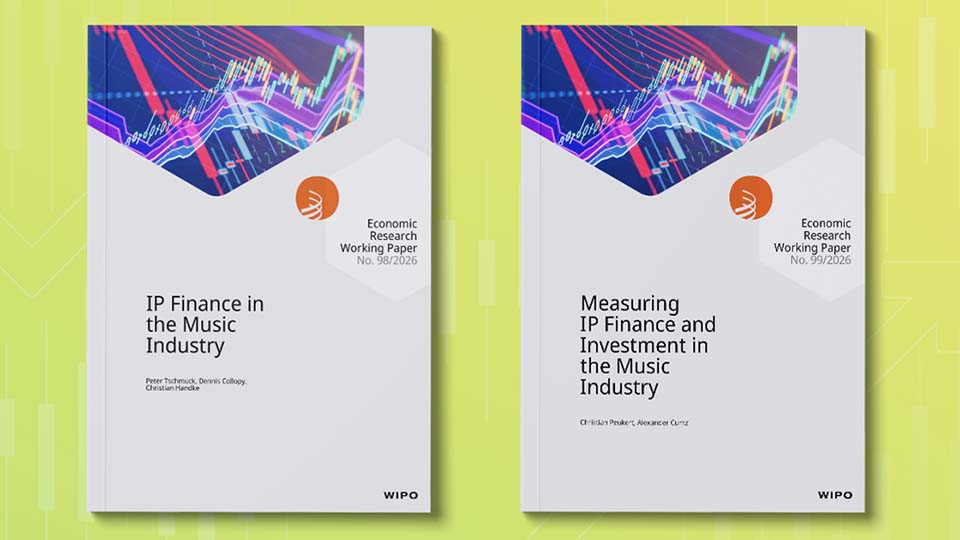
The reports identify three critical developments transforming music rights into investable assets:
- IP Finance in the Music Industry [PDF]
- Measuring IP Finance and Investment in the Music Industry [PDF]
1. The billion-dollar music catalogue sales boom
Financial giants including BlackRock, Blackstone, and Apollo Global Management have built in-house funds and joined specialized music companies in acquiring catalogues from legendary artists like Justin Bieber, Bruce Springsteen, and Pink Floyd. WIPO analysis shows that media coverage of "music rights securitization" exploded from 56 articles in 2014 to 450 by 2024—outpacing all other music industry news categories.
U.S. Copyright Office data reveals that music rights transfers increased 65% by 2020, while the use of music rights as collateral in financial transactions nearly doubled since 2010. Strikingly, investors increasingly target established song catalogues and older works: music rights transacted in 2020 averaged 30 years from initial registration, compared to just 10 years in the 2000s.
2. Why now? The streaming revolution
The streaming economy has made future revenues more predictable and transparent, transforming music into an attractive investment. WIPO research analyzing data from platforms like K-pop-focused Musicow shows that music IP assets remain largely insulated from stock market fluctuations, offering portfolio diversification with stable returns—particularly appealing to pension funds and institutional investors seeking alternatives to traditional bonds in a low-interest-rate environment.
Meanwhile, new digital marketplaces—including Musicow, Royalty Exchange, SongVest, and Jukebox—are democratizing access to music rights investments, collectively providing access to approximately $45 million in annual royalty streams. While modest compared to the billions flowing through institutional catalogue acquisitions, these platforms represent a meaningful opening of the market to individual investors and independent artists.
3. The rise of music marketplaces in IP finance
This transformation brings significant opportunities. Professional management and institutional capital add transparency and liquidity to previously opaque markets, while expanding alternative financing options for creators. Digital rights trad ing platforms are democratizing access to music investments and funding, connecting artists directly with individual investors.
Yet the transformation is not without risk. The focus on established catalogues may divert resources from discovering new talent, primarily benefiting legacy artists while offering little to emerging creators. Other potential risks include undervaluation by young artists selling rights prematurely, legal uncertainty around copyright frameworks, market concentration creating anticompetitive behaviors, or increased speculation introducing volatility. Transparent marketplaces, informed stakeholders, and adaptive policies can help ensure this financial innovation maintains competition and benefits everyone in the creative ecosystem.
What this means for the future of music finance
As music rights mature into a recognized asset class, policymakers face critical questions about copyright duration, royalty distribution, and competition policy. The challenge: ensuring that value flows equitably to both creators and investors while fostering innovation.
The model pioneered in music is already attracting attention in film, video games, and other creative sectors. How policymakers, artists, and investors navigate the tensions between financial returns and creative incentives will shape not just the music industry, but the future of intellectual property as a whole.
Join the conversation
Explore these findings in depth with leading researchers and industry experts by taking part in the WIPO-CEPR Webinar: "Where Music Meets Finance: Music Rights as Alternative Investment on the 3rd of March. Discover what this transformation means for artists, investors, and the future of creative industries.