London, Milan, New York, Paris — and, increasingly, Chișinău. The Moldovan capital now stages its own fashion week, its labels sit on international juries, and German Vogue has profiled its designers as names to watch. It is an unlikely rise for a small, landlocked country between Romania and Ukraine whose garment factories once stitched almost entirely for other companies' labels. The turning point was a deceptively simple decision: to put a name — and a trademark — on what Moldova makes. Over little more than a decade, the country's textile, apparel, footwear and leather producers have used branding and intellectual property (IP) to climb out of anonymous subcontracting and sell under their own brands at home and abroad. At the centre of that shift is Din Inimă – Branduri de Moldova ("From the Heart – Brands of Moldova"), a trademark-protected umbrella brand that gathers dozens of Moldovan labels under one identity.
Why Moldova's garment industry needed more than skilled hands
Moldova has a long history in the textile, apparel, footwear and leather (TAFL) industry, and a workforce whose tailoring is respected well beyond its borders. For years, though, that skill was largely invisible to consumers. Most Moldovan manufacturers worked under lohn contracts — cut-make-trim arrangements in which a local factory produces garments to a foreign label's specification, and the foreign label keeps the brand, the customer relationship and most of the margin. As the WIPO Magazine reported, Moldovan factories had for years quietly produced collections for some of the world's leading fashion houses — among them Armani, Calvin Klein, Dolce&Gabbana and Prada — while capturing only a fraction of the value of the clothes they made.
The economic logic of moving up that value chain was clear. A factory paid a fixed fee per garment is exposed to price competition from any lower-cost producer, while a company that owns a recognised brand can command a premium, build customer loyalty and decide its own future. The missing ingredient was not manufacturing capability but intangible assets — names, designs and the legal tools to protect and promote them.
Din Inimă: an umbrella trademark to put Moldovan brands on the label
In 2012, the Association of Light Industry Employers (APIUS) and the Government of Moldova launched Din Inimă – Branduri de Moldova as a shared, country-wide umbrella brand for TAFL companies, originally with support from the United States Agency for International Development (USAID) through its Competitiveness Enhancement and Enterprise Development project. The idea was to make Moldovan-made clothing, footwear and accessories easy to recognise and trust, and to give small producers a credible platform to sell under their own names rather than only as subcontractors.
"We saw a need to decrease the number of enterprises providing only lohn services and increase the number of those selling products under their own brands," Diana Stici of the legal department of Moldova's State Agency on Intellectual Property (AGEPI) told WIPO in 2016. The umbrella brand was conceived as a public-private partnership combining training, promotion and IP support, and the Din Inimă name and logo were themselves registered as trademarks, owned by APIUS, so that the shared identity could be protected and licensed to participating companies. As of 2026, APIUS holds two active marks for the brand, registered with AGEPI (MD502018000042624 and MD502013000032551).
The model spread quickly. As more companies joined the umbrella brand, APIUS membership grew, and the partnership broadened to include the Technical University of Moldova and government ministries. Today Din Inimă (now styled DININIMA) presents itself as a collective platform uniting more than 70 Moldovan brands across clothing, footwear and accessories, with its own retail network — including a large dedicated floor at the Zorile National Shoe Centre in Chișinău — and an online storefront that helps shoppers find local labels in one place.
How trademarks turned Moldovan makers into brand owners
For a fashion industry, the most valuable IP is rarely a patent; it is the trademark and the design language that consumers come to recognise. "When speaking about the TAFL industry, the most critical area would be trademarks and design, and that is why the focus of the Din Inimă project was on branding development and promotion," AGEPI's Liliana Vieru told WIPO in 2016. Her colleague Diana Stici added that strong brands "diminish risk and obtain higher profits" for their owners — the practical case for treating a name as an asset worth registering.
The registrations followed. By the mid-2010s, according to AGEPI figures, 49 participating companies had each secured at least one national trademark, for a combined total of roughly 150 registrations, and seven of them had reached beyond Moldova's borders using the WIPO-administered Madrid System for the international registration of marks.
ZIPHOUSE and the rise of a Moldovan fashion ecosystem
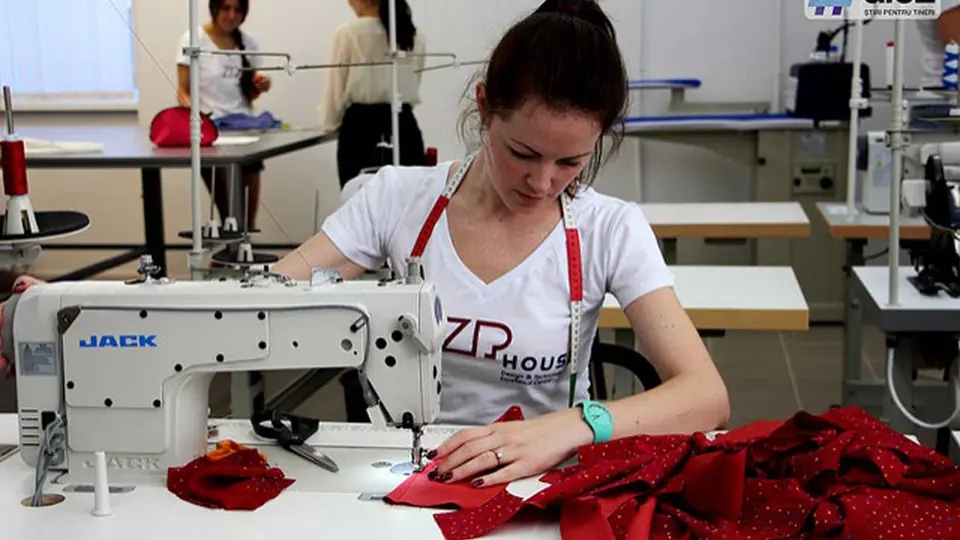
Branding only sticks if there is talent and infrastructure behind it. In 2015, the same partnership opened a design and technology centre at the Technical University of Moldova that has since grown into ZIPHOUSE, a fashion innovation hub offering young designers, startups and manufacturers training, co-working space and access to production equipment, with a dedicated NGO arm added in 2020. Its mission is straightforward: connect Moldovan fashion to the wider industry and equip a new generation with skills the sector needs.
That ecosystem has been reinforced by a long line of donor-backed competitiveness programmes. The most recent, the Future Technologies Activity, ran from 2021 and was financed by USAID and Sweden to strengthen sectors including light manufacturing and the creative industries. Across the family of programmes since 2015, Chemonics reported in 2023 that more than 180 teams and startups and over 110 small and medium-sized enterprises had passed through acceleration programmes in technology, fashion and digital business. More recent editions have leaned on a broader set of partners. The 2025 season was staged within the Swiss-funded RECONOMY programme, implemented by Helvetas, which brought Moldovan, Ukrainian and Armenian designers onto a shared runway, while the spring/summer 2026 edition was supported by Innovate Moldova alongside Swedish and UK partners.
Moldovan Brands Runway takes local labels to international audiences
The clearest sign of how far the sector has travelled is the Moldovan Brands Runway (MBR), the fashion week organised by ZIPHOUSE and APIUS that has become the country's premier showcase. Early editions leaned into technology — the second edition in 2023 staged DININIMA brands alongside designers from Ukraine, Armenia and Romania in an AI-themed setting — and the event has since drawn genuine international attention. The autumn/winter 2024–25 edition, "Cultural Rhythms," featured 24 designers across 17 runway shows and was attended by representatives of Vogue Germany, WWD Japan and the fashion school Polimoda, with Netflix covering parts of the event and the President of Moldova in attendance. The following "Reframing" season in 2025 was judged by an international jury that included figures from the Richemont Group, Alexander McQueen, Alexander Wang, Erdem and Vogue Germany, while the spring/summer 2026 edition ran in March 2026.
The runway has translated into reach for individual brands. Julia Allert, launched in 2005, now sells through boutiques in London, New York and Los Angeles alongside its Chișinău flagship, and Moldovan labels have begun appearing at regional fashion weeks such as Mercedes-Benz Bucharest Fashion Week. The regional dimension matters too: through RECONOMY, recent editions have connected Moldovan, Ukrainian and Armenian designers on a shared runway, turning a national initiative into a small Eastern Partnership fashion network.
A women-led industry built on local brands
Moldova's fashion turnaround is also, overwhelmingly, a story about women. Women have long made up the large majority of the TAFL workforce, and as new domestic labels emerged the jobs and businesses they created went disproportionately to women — many of them founders and designers rather than line workers. Since its inception, the Din Inimă training programmes have been attended mostly by women learning branding, design and IP skills.
"Fewer women are leaving Moldova for jobs in other countries, which has resulted in an increase in the skilled workforce in the TAFL industry," Liliana Vieru observed at the time. The pattern holds on today's runways, where designers such as Julia Allert sit among the most internationally recognised names the country has produced — a reminder that the value created by a registered brand accrues to its owner, and that ownership in this industry is heavily female.
Branding for the EU single market and beyond
The branding push has coincided with Moldova's decisive turn toward Europe, and the two reinforce each other. A free-trade area with the EU has been in place under the Association Agreement since 2016; Moldova was granted EU candidate status in June 2022 and opened accession negotiations in 2024. The EU is now by far Moldova's largest trading partner, taking roughly two-thirds of its exports, and textiles and clothing remain among the country's main exports to the bloc.
For an export industry built on EU buyers, dependable IP rules are part of the infrastructure. AGEPI has been aligning Moldova's IP framework with the EU as part of the accession process, working with the EU Intellectual Property Office and partners through programmes such as the EU-funded project on strengthening IP rights in Armenia, Moldova and Ukraine. A clearer, EU-aligned system for registering and enforcing trademarks and designs makes it easier for a Moldovan label to defend its identity in the very markets it is trying to win.
Moldova’s experience: the value of distinctive signs
Moldova's experience shows what trademarks and collective branding can do for producers who start out invisible. The country did not need new factories so much as a new relationship with the customer — and a name is what starts that relationship. By registering individual marks and pooling them under a shared, protected umbrella brand, Moldovan companies converted manufacturing skill into something they could own, promote and carry into foreign markets.